
Lasting love in midlife: the psychology of love, closeness and intimacy every man over 40 should know
· 阅读约 13 分钟 · Nicky Pimpz

Remember how hard your heart pounded the first time you held her hand?
Twenty years on, most conversations at home are "Did we pay the school fees?", "When is Mum’s doctor’s appointment?", "Why is the electricity bill so high?" Love hasn’t disappeared, but it’s buried under a pile of responsibilities, and many couples feel like mere "housemates".
If you’re a man over 40 who feels this way, the good news is you’re not alone, and psychologists have studied this for decades. They now know what makes love last. Here it is, academic but fun to read.
The 30-second summary
- Complete love has 3 sides, and passion is the one that fades most easily in midlife
- Couples who last "turn toward" each other 86% of the time; couples who divorce, just 33%
- Happiness rises with sexual frequency up to about once a week, then levels off: quality beats quantity
- About 52% of men aged 40–70 have had some erection problems: it’s common, and it can be talked about and looked after
Why does love fade in midlife?
Psychologists see ages 40–55 as life’s heaviest load. Many are the "sandwich generation", caring for growing children and ageing parents at the same time, while work is at peak responsibility.
The result: the time and energy once given to your partner gets split up, and the relationship slowly shifts from "lovers" to "family management team". It works well, but it lacks warmth and excitement.
The triangle theory of love: real love has 3 sides
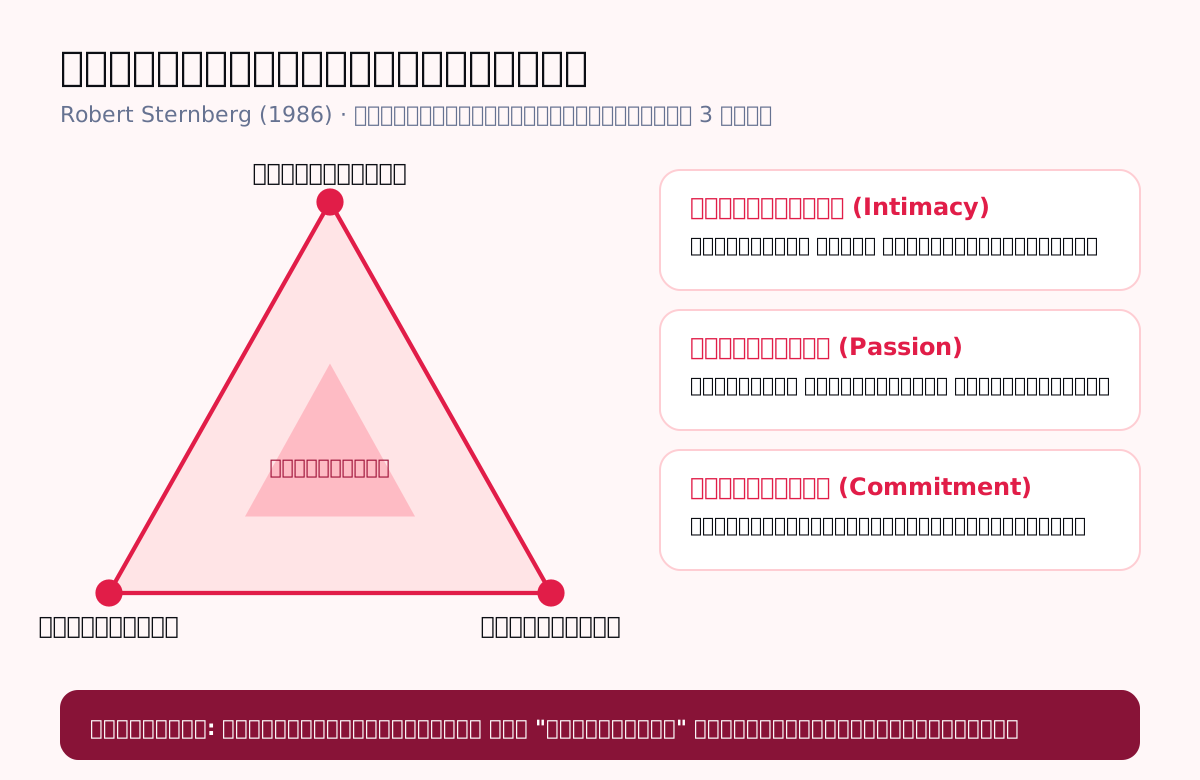
In 1986, psychologist Robert Sternberg proposed that love has three sides, like a triangle:
- Intimacy: warmth, trust, being able to talk about anything
- Passion: attraction, excitement and sex
- Commitment: the decision to stay together for the long term
With all three, Sternberg calls it "consummate love".
In midlife, commitment is usually very strong, because you’ve been through so much together, but passion is the side that fades most easily. With only intimacy and commitment left, Sternberg calls it "companionate love": good, but many couples miss the old spark.
The good news: passion can be rekindled, if you know how.
Lessons from the "love lab"
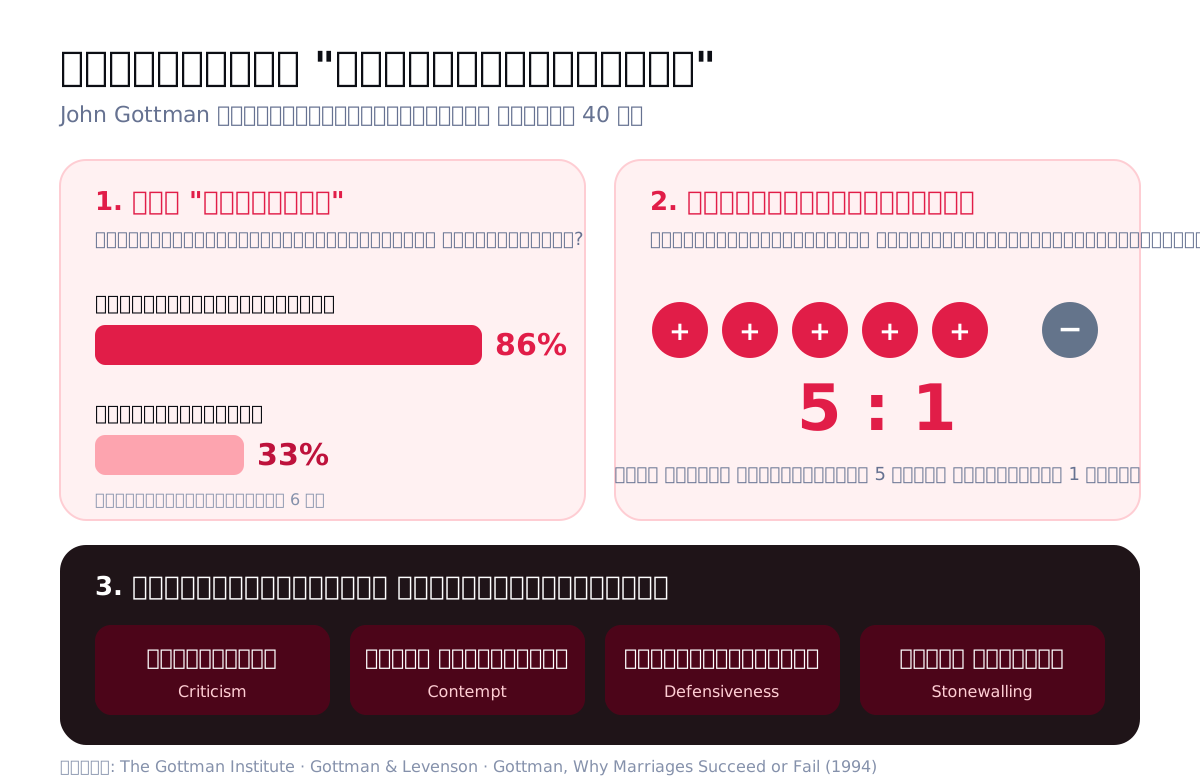
American psychologist John Gottman has studied thousands of couples for more than 40 years, in a room nicknamed the "Love Lab", and found some remarkable things.
1. "Turning toward" matters more than you think
Every day, partners send each other "bids" for attention: "Look at that bird!", "I’m exhausted today", or just a sigh. The question is whether we turn toward (respond, show interest) or turn away (ignore, keep scrolling).
Gottman followed newlyweds for 6 years and found that couples who stayed together turned toward each other 86% of the time, while couples who divorced did so only 33% of the time.
Small things, like putting down your phone and asking "What bird?", are deposits into your love account that keep adding up.
2. The magic 5-to-1 ratio
Gottman found that during conflict, stable couples have about 5 positive interactions for every negative one: a compliment, a touch, a joke, understanding. Arguing isn’t the problem, as long as there are enough "good moments" to balance it out.
3. The four warning signs
Gottman also identified 4 behaviours that predict break-ups with striking accuracy: criticism (attacking the person rather than the behaviour), contempt, defensiveness and stonewalling. Men often slip into the last one when stressed.
The science of intimacy
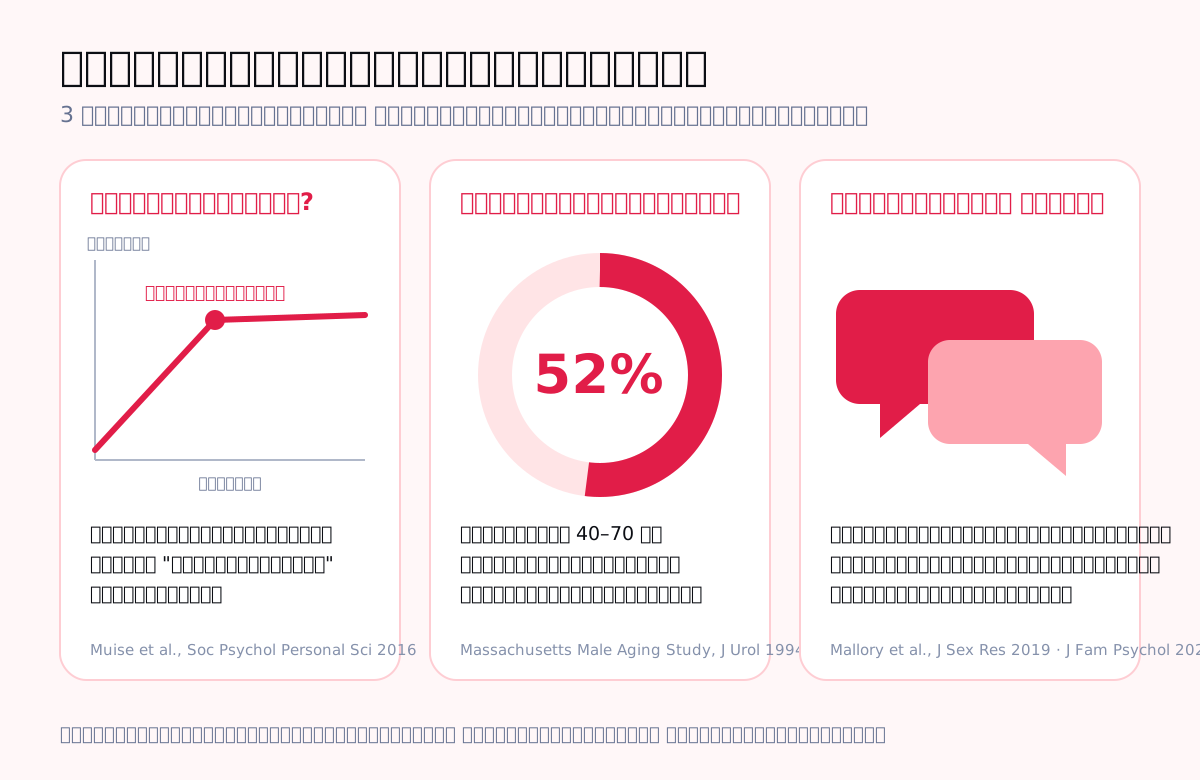
Sex is a key part of "passion", and something midlife men worry about but rarely talk about. Research offers three facts that ease the worry.
How often is enough?
A 2016 study by Muise and colleagues, analysing data from more than 30,000 people, found that happiness rises with sexual frequency up to about "once a week", after which it doesn’t rise further, regardless of age or how long the couple had been together.
So there’s no need to pressure yourself to perform like you did at 25. Consistency and quality matter more than numbers.
You’re not alone
The classic Massachusetts Male Aging Study found that about 52% of men aged 40–70 had some degree of erection problems. The causes aren’t just age but also stress, high blood pressure, diabetes, high cholesterol, smoking and alcohol, most of which relate to blood vessel health.
Importantly, this can be an early warning sign of heart and vascular disease, so seeing a doctor isn’t embarrassing: it’s looking after yourself and your family.
Talking really helps
Meta-analyses by Mallory and colleagues found that couples who talk openly about sex have higher sexual and relationship satisfaction, and better sexual function too. Communication is a "tonic" you don’t have to buy.
7 ways to rekindle love at home
- Turn toward her every day. When she tells you something or sighs, put your phone down and listen. It takes 30 seconds and pays off for years.
- Hit 5-to-1. Compliment more often, say thanks for small things, hug before leaving the house.
- Do new things together. A 2000 study by Aron and colleagues found that couples who shared new and exciting activities felt more satisfied with their relationship: try a new restaurant, take a cooking class, go somewhere you’ve never been.
- Date once a week. Leave the kids with the grandparents and go out as a "couple" for two hours. No talking about school fees.
- Talk openly about sex. Start simply, such as "Have we drifted apart lately?", in a relaxed moment, not when stressed.
- Touch every day. Hold hands, hug, rub her shoulders. Touch that isn’t aimed at sex builds closeness and reduces pressure.
- Look after your body, because energy, confidence and blood vessel health all directly affect your relationship.
Looking after yourself = looking after your relationship
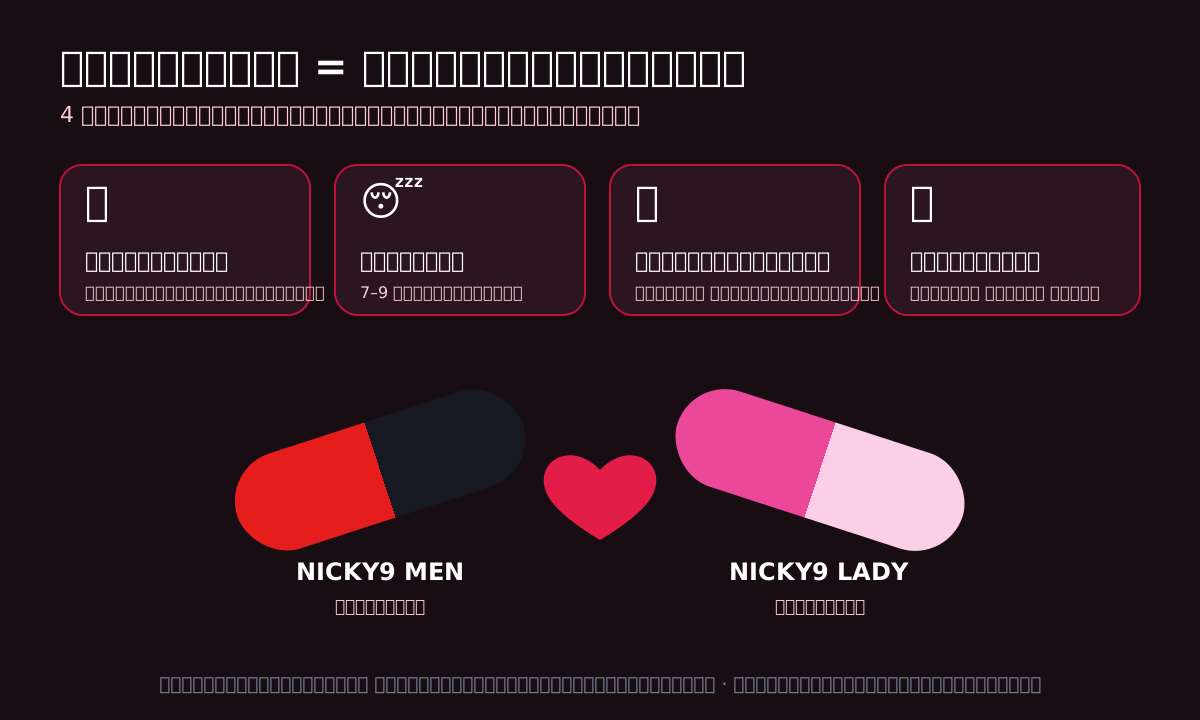
Many men look after everyone at home except themselves. But the truth is, a healthy, energetic and confident man is the one with time and energy left for the people he loves.
Four pillars you can start today
- Exercise 150 minutes a week for your heart, blood vessels and mood
- Sleep 7–9 hours; too little makes you irritable and low on energy
- Food and minerals: less alcohol, more protein, vegetables and key minerals such as zinc
- Annual check-ups for blood pressure, blood sugar and cholesterol
A supporting helper for men who look after themselves
Alongside the four pillars, many men choose a supplement as a helper. Nicky9 Men (Nicky Pimpz 9) brings together 10 ingredients men know in one capsule:
- L-Arginine 100 mg, the nitric oxide building block (read more)
- Zinc bisglycinate + oyster extract: zinc contributes to the maintenance of normal testosterone levels (read more)
- Korean ginseng, cordyceps and black ginger, Asian herbs men have used for generations (read more)
- Garlic extract for blood vessels (read more)
Why midlife men choose Nicky9 Men
- ✅ Pocket-sized and discreet: 2 capsules in a small box that fits in a wallet, perfect for a planned date night
- ✅ Easy to use: 1 capsule about 15 minutes before activity
- ✅ 10 ingredients in one capsule: no need for several bottles
- ✅ Thai FDA registered: No. 74-2-05260-5-0012
👉 See details and order Nicky9 Men
Look after each other
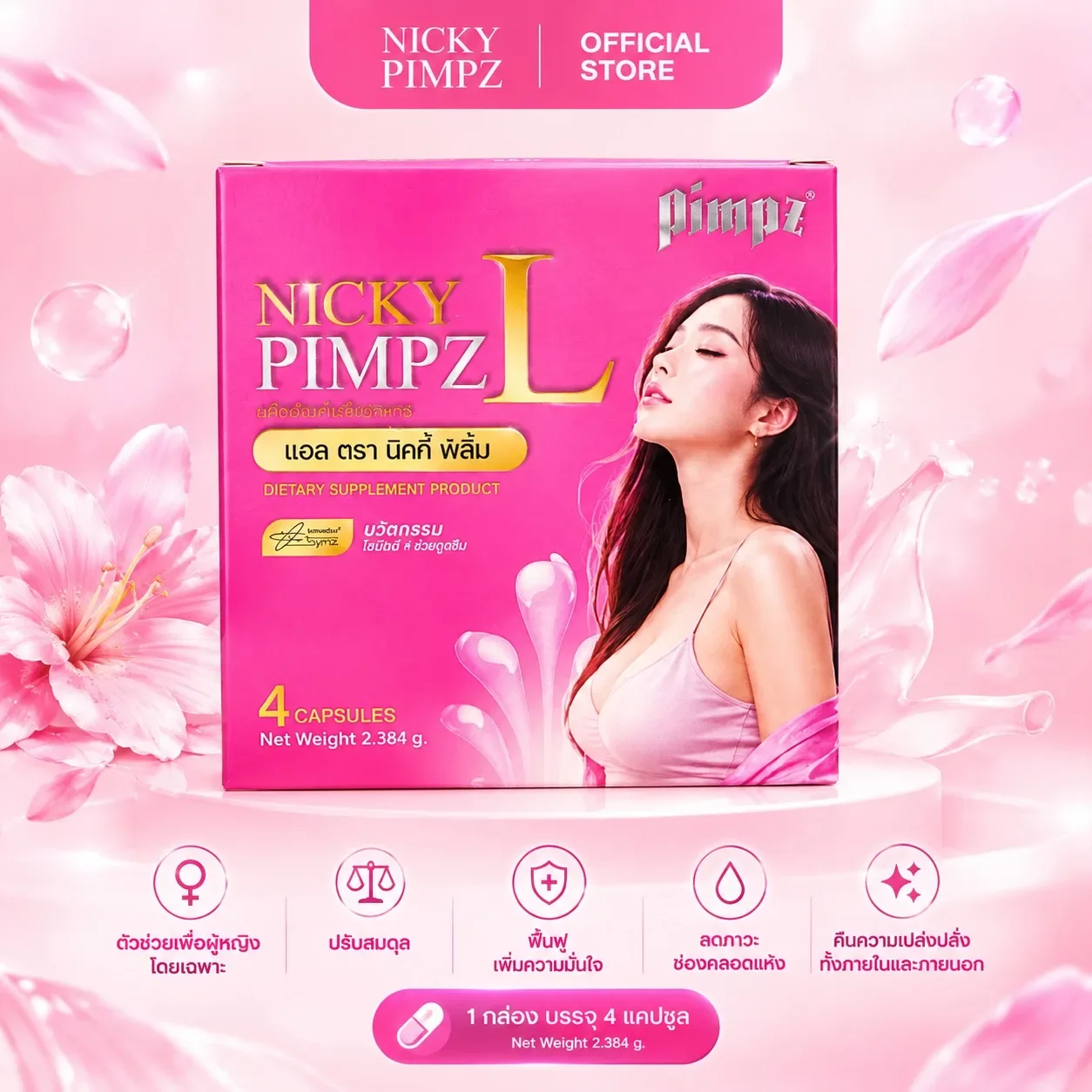
A good relationship comes from both sides. Nicky9 Lady is a dietary supplement designed for women, with 15 ingredients including soybean extract, dong quai and fish collagen. Looking after yourselves together is a small thing you do as a couple, and another way of saying "I still care".
Important: dietary supplements are supporting helpers, not treatments. If you have ongoing sexual problems or a health condition, especially heart disease, or take nitrate medicines, always talk to a doctor first.
FAQ
Is it normal for love to fade after many years of marriage?
Very normal. In Sternberg’s theory, passion tends to decline over time while commitment grows. But research shows passion can be rekindled through new shared activities and small daily acts of attention.
How often should we have sex for a healthy relationship?
Research found happiness rises with frequency up to about once a week and then levels off. There’s no right number for every couple; what matters is that both of you are happy.
How do I bring up sex with my wife without it being awkward?
Pick a relaxed moment, not during or after an argument. Start with your own feelings, such as "I miss the times we were close", rather than blame, and really listen to her side.
When should I see a doctor about sexual problems?
When it keeps happening for several weeks, or if you have conditions such as high blood pressure, diabetes or high cholesterol, because it may signal heart or vascular disease. Seeing a doctor is the best self-care.
The bottom line
Love in midlife hasn’t disappeared; it’s just buried under responsibilities. Psychology tells us that small things done every day (turning toward each other, compliments, touch and trying new things together) are what make love last. And looking after your own body is looking after your relationship at the same time.
Start tonight: put down your phone and ask her, "How was your day?" Then plan a date this week, look after yourself with Nicky9 Men, and invite her to look after herself with Nicky9 Lady.
References
- Sternberg RJ. A triangular theory of love. Psychological Review. 1986;93(2):119–135.
- Turn toward instead of away. The Gottman Institute.
- Gottman JM. Why Marriages Succeed or Fail. Simon & Schuster; 1994.
- Muise A, Schimmack U, Impett EA. Sexual frequency predicts greater well-being, but more is not always better. Social Psychological and Personality Science. 2016;7(4):295–302. (research news summary)
- Feldman HA, et al. Impotence and its medical and psychosocial correlates: results of the Massachusetts Male Aging Study. J Urol. 1994;151(1):54–61.
- Mallory AB, Stanton AM, Handy AB. Couples’ sexual communication and dimensions of sexual function: a meta-analysis. J Sex Res. 2019.
- Dimensions of couples’ sexual communication, relationship satisfaction, and sexual satisfaction: a meta-analysis. J Fam Psychol. 2022.
- Aron A, et al. Couples’ shared participation in novel and arousing activities and experienced relationship quality. J Pers Soc Psychol. 2000;78(2):273–284.
Dietary supplement — not intended to prevent or treat any disease. Eat a varied, balanced diet from all 5 food groups. This article is for education only and is not medical or therapeutic advice.
- #relationships
- #love
- #intimacy
- #midlife
- #nicky9-men
- #nicky9-lady
猜你喜欢

相关文章
 阅读更多
First night together: how to leave her impressed and wanting to see you again
The first night decides whether there’s a next time, and most men focus on the wrong thing. 9 techniques, from dinner to the next morning’s message, that keep her thinking about you for days.
 阅读更多
Too nervous to get hard? Why it happens with a new partner and how to fix it
Everything works fine on your own, but with someone new your body won’t cooperate. It doesn’t mean something is wrong with you; your brain is simply too wound up. Here’s how to break the cycle before the big night.
 阅读更多
How to help her climax: 7 techniques women wish you knew but won’t say
Many women rarely climax with a partner, and many have faked it to make him feel good. Close that gap with 7 research-backed techniques that will make her never forget you.